The Last Word

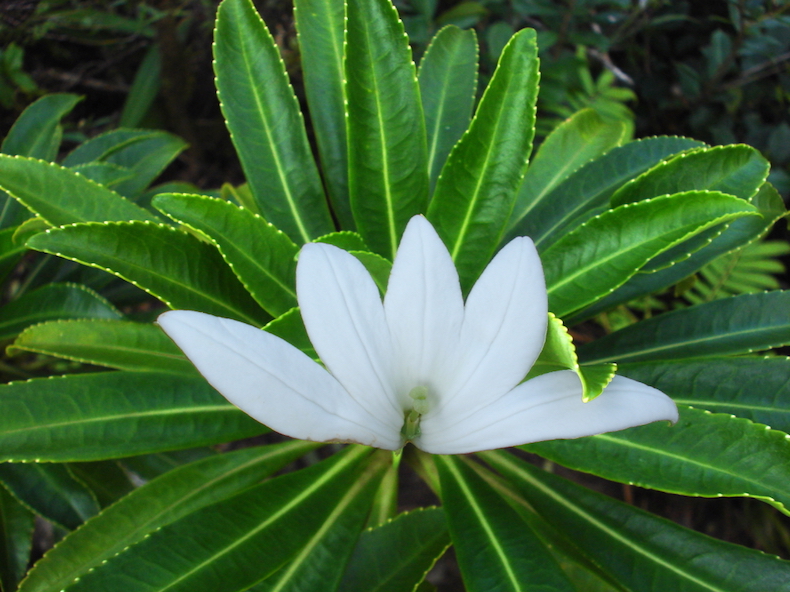
A small white flower with only half a complete corolla of petals--just five petals spanning 180 degrees.July 10 – 14, 2017

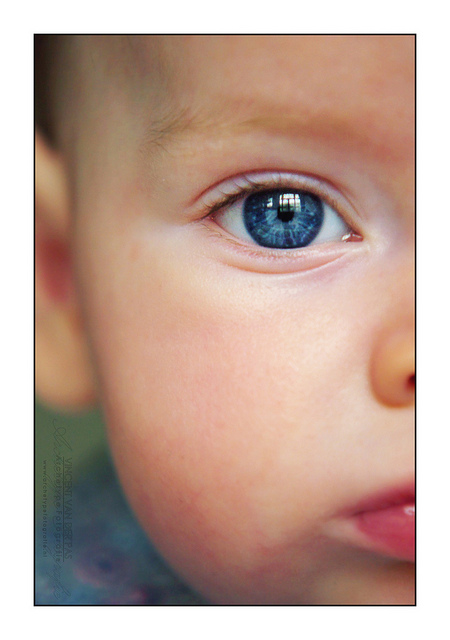
Guest Elizabeth Preston’s baby — what’s she doing? what’s she thinking?  Darwin had some ideas about that.

Emma is in Tahiti — isn’t everyone? — and sees a flower so rare, so strange, so precious, that it has to be kept in a cage.

If only mental illness were simple, says guest Linda Dattaro.  We could just take pills, instead of dealing with gray scales on every known axis.

Michelle is stretching a bit on Harrison Ford’s chest waxing being a metaphor for the deforestation of the tropics.

Don’t listen to the climate Cassandras, say Cassandra.  Well, ok, listen, but calm down a bit.


Cassandra and the Climate Apocalypse

When my mother named me Cassandra, she didn’t know anything about Greek mythology. She had never heard of the princess who prophesied the destruction of Troy. But I inherited some of Cassandra’s attributes all the same. I’m a doom-and-gloom kind of girl. My visions of the future involve illness, poverty, and untimely deaths. Each headache surely heralds a brain tumor. Each sidewalk stumble will no doubt beget several busted teeth.

But unlike Cassandra of Troy, I’m a terrible soothsayer. My visions are mostly wrong. This fact allows me to revel in worst-case scenarios without entirely believing they’ll come true. I get to spout death and destruction, yet I still manage to get up each morning and face the day. I know the worst probably won’t come to pass.

But what if it does? Continue reading →

Science Metaphors (cont.): When Han Solo Got Waxed

The latest issue of the journal Environmental History features an article titled “Chest Hair and Climate Change: Harrison Ford and the Making of ‘Lost There, Felt Here.'” Stop snickering! This is a serious thing. At least, I think it’s a serious thing. Section editor Finis Dunaway acknowledges that while “readers were not expecting to find an essay about chest waxing in this issue of Environmental History,” said essay “addresses critical questions about global responsibility and global power dynamics.”

Let’s see here. The essay, by University of South Carolina geography professor David Kneas, concerns a public-service announcement, commissioned by Conservation International in 2008, that does, in fact, show Harrison Ford getting his chest waxed. (You can watch it here.) Kneas describes it as follows: Continue reading →

Guest Post: The Non-Simplicity of Mental Illness

ONE OCTOBER DAY in the fall of my junior year of college, I found myself sitting in a chair across from a small blond woman with a look of deep concern on her face as she stared into mine. She had something to tell me, she said, and it was clear she knew that the something would upset me. Her eyes were wide, her hands  on the arms of a chair that would have been more appropriate in a public library lounge. Her windowless office was warmly lit with a few small lamps, none of the bright fluorescence and antiseptic shine of a doctor’s office. Still, it was a doctor’s office, or at least it was an office in which something resembling medical care was taking place, and I had the feeling she was about to tell me that mine could no longer take place here.

I was right, but for the wrong reasons. At 20, a good student from a good suburban family, I felt I had no right to sit there and lament to a professional who was here purely to solve the hardest of personal problems. I knew she was about to tell me I had to go, that there were precious few time slots available and I was taking one from someone who actually needed it.

Instead she looked at me with that genuine concern, and told me, gently, that she suspected my troubles were not something she could address in the 12 free sessions university students were allotted at the counseling center, that I needed someone who could help me long term if I were to ever stop crying in front of near strangers, if I were to ever get better.

That moment in her office turned into months, then years, of starting and stopping treatment, of bouncing between doctors, searching for the single thing at the bottom of it all: the one memory, the one trauma, the one blemish on my makeup that could explain everything, that could be wiped away to make me a happy person. That is how I had come to understand mental illness, as a simple disease that could be treated if only one could figure out what the disease was. Continue reading →

A wild flower, caged.

A small white flower with only half a complete corolla of petals--just five petals spanning 180 degrees.About 150 miles northwest of Tahiti lies Raiatea, 65 square miles, and the spiritual center of the Polynesian world. This week, a holy site there, Taputapuatea, was added to the list of UNESCO world heritage sites.

Another world-famous marvel on the island is the tiare apetahi, an incredibly rare flower found only on Raiatea, and only on the high plateaus in the center of the island. The common tiare is a flower that grows all over the Pacific. It is in the gardenia family, and has a lovely scent. In Tahiti, it is often used used to make flower necklaces called heis (like Hawaiian leis) and flower crowns.

But the tiare apetahi sports just half a corolla of five petals, looking a bit like a fingered hand—a resemblance that comes up in a local legend about the flower.

Alas, like so many rare and beautiful things, the tiare apetahi is being loved to death. In a recent story in the newspaper la Dépêche de Tahiti, correspondent Jean-Pierre Besse recounts how 81% of the plants have died since 1995, mostly due to souvenir-hunting tourists who snap off bits of the bushes, often resulting in the death of whole limbs or plants. In response, the students of the mechanics class of the Protestant vocational school Tuteao a Vaiho of Uturoa have built physical cages to surround the remaining bushes.

Islands are worlds in miniature and, where ecology is concerned, they are often tiny versions of the future. Ecological change is faster and more dramatic on small isolated islands. Non-native species, rapacious hunting or collecting, pollution, sea-level rise—all are more dangerous where there’s little space and no place to run to.

Putting a stainless steel cage around a rare flower is a sobering image to confront when thinking about the future of our world. Extreme measures in conservation are not new. Already, the Guam Kingfisher waits in protective custody for humans to rid its island of the exotic brown tree snake; the Hawaiian crow or ʻalalā languishes at the San Diego Zoo; and the last toromiro trees yearn for Easter Island from Kew Gardens outside London. But the tiare apetahi, which apparently resists transplantation, is the first plant I’ve heard of to be transferred into “captivity” in situ. If all the plants have cages built around them, then has it become “extinct in the wild”? Or do the cages become an extended part of its morphology—a deterrent supplied by humans to a plant with neither thorns nor poisons to keep away the selfish and greedy—much the way our phones have become extensions of our memories and minds?

Most simply, the cage is a message from the students to the tourists: you can’t be trusted not to destroy this species. The students can’t cage up the tourists, though I am sure they would be tempted if they could. I suppose the real deep work of environmentalism is to create a global culture in which cages wouldn’t be needed.

We all know that many of the species with which we share the planet are in danger because of humanity’s actions. Things are bad—but not so bad that most of the world’s endangered species cannot yet be saved. There is still time to stave off the “6th great mass extinction” that you may have heard has already begun. There is still time!

We know what we need to do. Now we must simply do it. Reduce emissions drastically; set undeveloped land aside; reduce our footprints in land, water, carbon, etc; educate women and work for easy and socially acceptable family planning worldwide; commit to making our decisions on behalf of all species and not just ourselves. Stop picking the tiare apetahi! Maybe in our lifetimes the flowers can be uncaged. 

Guest Post: The Baby Equinox and Charles Darwin

On this year’s summer solstice, the longest day, my daughter is about to reach her own personal equinox. She has lived outside of me for nine and a half months, almost as long as she spent swimming in my belly. The milestone means she now belongs to the world more than to me. In a way, it’s also a shift in season.

In her early months my daughter acted like a displaced citizen of my body. She preferred to nap with her ear against my sternum, hearing my heart. But now she squirms and dives to escape my arms. She waves incessantly at strangers. The world has her full attention.

Like a small scientist, she studies her environment. She likes to test gravity by pulling up on the coffee table and then plopping back down. When she’s crawling and hits her head on something, she pauses and then gently does it again, on purpose, feeling the edges where her own body meets the outside. I am studying her, too, to see what rules she has learned about the universe. Does she understand what she sees in a mirror? Why is peekaboo so unfailingly funny?

Charles Darwin also turned a scientist’s eye on one of his baby sons. In 1877 he published “A Biographical Sketch of an Infant” in Scientific American, based on a diary he’d kept 37 years earlier. Darwin had 10 children and, he noted, “excellent opportunities for close observation” of these creatures. Continue reading →

The Last Word

July 3-7, 2017

Legendary artifact collector Forrest Fenn has hidden a bronze chest in the wilds. More than one treasure hunter has died looking for it, but Craig has seen its contents with his own eyes.

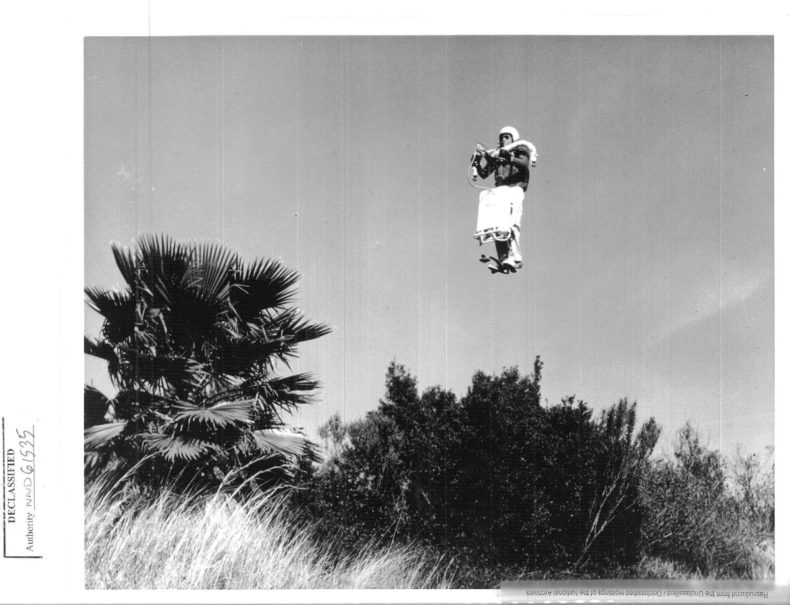
“Where’s my jetpack?” is the ubiquitous complaint of disillusioned mid-century science fiction fans. “It’s right here,” says DARPA, “But it’s kind of dumb.”

Since when is not being good at something a reason to stop doing it, asks Helen. Drawing helps her get better at seeing, and the effort itself is gratifying.

When you pour grease down the sink, you’re letting the giant sewer fatbergs win, says Jennifer. So just stop it.

Michelle has rediscovered Madeleine L’Engle’s classic A Wrinkle in Time with her daughter. It still holds up, and the message remains the same—snuggle in and listen.


Redux: Tesser Well

When I first published this post, my daughter was six. Now, she’s eight-going-on-nine, and halfway through the Harry Potter series. But on dark and stormy nights, winter or summer, she still feels the pull of A Wrinkle in Time—and I do, too.

______

It was a dark and stormy night.

In her attic bedroom Margaret Murry, wrapped in an old patchwork quilt, sat on the foot of her bed and watched the trees tossing in the frenzied lashing of the wind. Behind the trees clouds scudded frantically across the sky. Every few moments the moon ripped through them, creating wraithlike shadows that raced along the ground.

The house shook.

Wrapped in her quilt, Meg shook.

______

The opening lines of the children’s classic A Wrinkle in Time are never all that far from my mind. As a kid, I loved the book so much that given the chance, I would have crawled inside it and stayed. And this time of year—especially at night, when the wind is blowing and branches are scratching across the windows—I often think of Madeleine L’Engle’s archly purple curtain-raiser and its creepy, cozy promise.

Snuggle in, it says, and listen.

A Wrinkle in Time influenced me more than any single book should have. I didn’t so much as identify with its main character—nerdy, stubborn, flawed Meg—as gradually grow to resemble her. Calvin, Meg’s nascent love interest, was probably my first crush. (Well, it was either Calvin or MacGyver. Which explains a lot.) Madeleine L’Engle and her characters encouraged my appreciation for science and scientists—and my tendency to wander off, unsupervised, to other planets.

A Wrinkle in Time has always had its detractors, young readers who find it boring, or unbelievable, or annoying. But many more boys and girls dive in deep, as I did, and remember it as adults with a kind of desperate fondness.

Continue reading →